

Best Hebrew podcasts for learners
Hebrew podcasts fit commutes, walks, and chores. These seven shows cover slang, narrative journalism, graded fiction, and structured lessons. None of them replaces reading practice. Use podcasts for listening input and pair them with graded reading for full progress.
At a glance
| Best for | Price | |
|---|---|---|
| Streetwise Hebrew | Modern slang and idioms | Free / Patreon extras |
| HebrewPod101 | Structured lesson audio | Free tier / $4–23/mo |
| Piece of Hebrew | Intermediate natural conversation | Free / club for transcripts |
| Israel Story | Narrative journalism in Hebrew | Free |
| Fluent Fiction Hebrew | Stories with bilingual retelling | Free |
| Aleph with Beth | Biblical Hebrew audio lessons | Free / Patreon |
| Integraliah Hebrew | Beginner modern Hebrew audio | Free |
1. Streetwise Hebrew
Best for: Learning modern slang, idioms, and cultural context in 10-minute episodes
| Host | Guy Sharett |
|---|---|
| Episode length | About 5–15 minutes |
| Level | Intermediate and up |
| Price | Free on Apple Podcasts and Spotify; Patreon for all-Hebrew episodes |
| Update schedule | Regular episodes on TLV1 |
Streetwise Hebrew is the most popular Hebrew learning podcast for good reason. Guy Sharett picks one word, phrase, or cultural idea per episode and explains how Israelis actually use it. Episodes cover slang like סמוך עליי (samoch alay, trust me) and roots that appear in everyday speech.
English explanations make the show accessible to intermediate learners. Patreon supporters get all-Hebrew episodes and monthly Skype chats. The free feed alone is enough for years of listening.
Streetwise Hebrew teaches how Hebrew sounds on the street. Pair it with reading practice so new expressions stick in your active vocabulary [2][3].
Pros
- Short, entertaining episodes on real Israeli Hebrew
- Strong focus on slang and cultural nuance
- Large back catalog of free episodes
- Guy explains grammar through living language
Cons
- Not a beginner course from zero
- All-Hebrew episodes require Patreon
- No reading or vocabulary tracking built in
2. HebrewPod101
Best for: Structured podcast lessons from absolute beginner upward

| Format | Teacher-led audio lessons |
|---|---|
| Episode length | 10–20 minutes typical |
| Level | Absolute beginner through advanced |
| Price | Free tier; full library from about $4/mo |
| Extras | PDF notes, vocabulary lists, video on paid plans |
HebrewPod101 publishes podcast-style lessons organized by level. Hosts explain vocabulary, grammar, and culture in clear audio with lesson notes. The free tier includes newbie lessons and weekly releases. Paid plans unlock the full archive and downloads.
The format suits learners who want a teacher in their ear. Lessons are more structured than Streetwise Hebrew but less narrative than Israel Story. You still need active reading to build literacy.
HebrewPod101 appears on nearly every Hebrew podcast roundup for good reason [2]. Use it for guided listening, not as your only study tool.
Pros
- Clear level paths from beginner up
- Lesson notes with Hebrew script and nikud
- Large archive on paid plans
- Works in any podcast app
Cons
- Most content behind a subscription
- Passive unless you add flashcards and reading
- Upsell prompts on the free tier
3. Piece of Hebrew
Best for: Intermediate learners who want natural Hebrew at a real pace
| Hosts | Doron and Elsa |
|---|---|
| Episode length | About 20–40 minutes |
| Level | Intermediate to advanced |
| Price | Free podcast; paid club for transcripts and study tools |
| Format | Conversations and solo episodes in Hebrew |
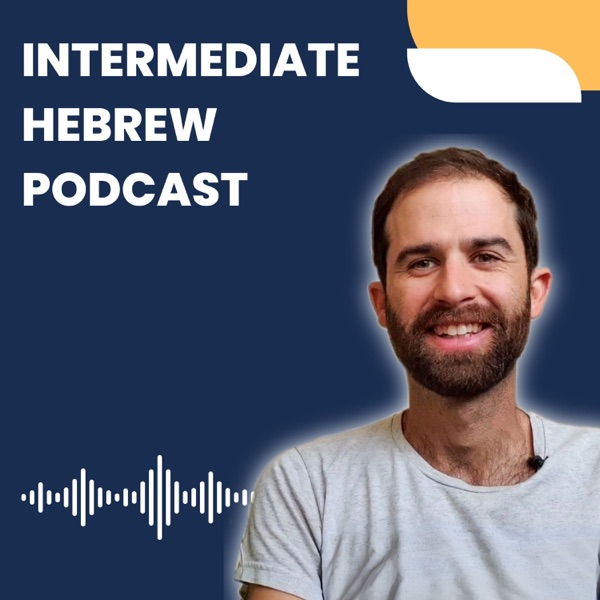
Piece of Hebrew publishes episodes in natural spoken Hebrew about daily life, culture, and language. Some episodes feature conversations with guests. Others are solo reflections. The pace matches how Israelis talk, not textbook slow Hebrew.
The free podcast builds listening stamina. The paid club adds transcripts, vocabulary lists, and flashcards for each episode. Intermediate learners get the most value once they can follow main ideas without reading every line.
Piece of Hebrew bridges classroom Hebrew and real speech. Combine it with graded reading so new words from episodes appear again in text [1].
Pros
- Authentic spoken Hebrew with cultural depth
- Free episodes on all major podcast apps
- Paid club adds transcripts and study materials
- Engaging topics beyond textbook dialogues
Cons
- Too fast for most beginners
- Full study tools require a paid club
- No beginner course structure
4. Israel Story
Best for: Advanced listening through narrative journalism about Israeli life

| Format | Narrative documentary stories |
|---|---|
| Episode length | 30–60 minutes |
| Level | Upper intermediate to advanced |
| Price | Free |
| Also available | English version exists; try Hebrew first |
Israel Story (סיפור ישראלי) tells extraordinary stories about ordinary Israelis. Episodes follow a documentary style similar to This American Life, with multiple segments tied by a theme. The show avoids heavy politics and focuses on human stories.
Hebrew is conversational but dense. Advanced learners build stamina and cultural knowledge. An English version exists if you need a safety net, but challenging yourself in Hebrew first pays off.
Israel Story is listening practice at its most engaging. It will not teach you the alphabet or verb tables. Use it when you already read at B1 or higher [2].
Pros
- Compelling stories that hold attention
- Free full archive
- Exposure to diverse Israeli voices and accents
- Cultural depth beyond language drills
Cons
- Advanced level only
- Long episodes need focused listening time
- No lesson notes or vocabulary lists
5. Fluent Fiction Hebrew
Best for: Short stories with sentence-by-sentence bilingual retelling
| Format | Story in Hebrew, then bilingual line-by-line replay |
|---|---|
| Episode length | About 10–20 minutes |
| Level | Beginner to intermediate |
| Price | Free |
| Extras | Transcripts on supporting platforms |
Fluent Fiction Hebrew tells short stories in Hebrew, then repeats each sentence alternating between Hebrew and English. The format supports listening comprehension without a full lesson structure around it.
Episodes suit learners who want story content but still need English support line by line. Vocabulary and grammar appear in context, which beats isolated word lists [1].
The show complements graded reading apps. Listen on a walk, then read a similar-level story to reinforce the same words in print.
Pros
- Story format keeps episodes engaging
- Bilingual retelling supports comprehension
- Free on major podcast platforms
- Good bridge between lessons and native content
Cons
- English retelling can slow advanced progress
- Smaller catalog than Streetwise or HebrewPod101
- No interactive exercises
6. Aleph with Beth
Best for: Biblical Hebrew listening through comprehensible input

| Format | Video lessons also published as podcast audio |
|---|---|
| Focus | Biblical Hebrew |
| Level | Beginner in biblical Hebrew |
| Price | Free; Patreon for extras |
| Method | Comprehensible input in Hebrew |
Aleph with Beth teaches biblical Hebrew through slow, visual lessons available on YouTube and as podcast audio. Teachers speak in Hebrew and use images and gestures so you acquire vocabulary without constant translation.
Modern Hebrew learners benefit from the shared alphabet and roots, but biblical vocabulary and grammar differ from street Hebrew. Torah students and seminary learners rate this channel highly.
Use Aleph with Beth for scripture goals. Pair with modern graded reading if your main aim is conversation and news [2].
Pros
- Excellent comprehensible input for biblical Hebrew
- Free large lesson library
- Audio works as a podcast during commutes
- High production quality
Cons
- Biblical focus, not modern Israeli speech
- Podcast feed is republished video audio
- No modern slang or daily conversation
7. Integraliah Hebrew
Best for: Beginner-friendly modern Hebrew audio from an Israeli ulpan
| Publisher | Ulpan Integraliah, Tel Aviv |
|---|---|
| Format | Short lesson-style podcast episodes |
| Level | Beginner to lower intermediate |
| Price | Free |
| Focus | Modern conversational Hebrew |
Integraliah Hebrew publishes podcast episodes from an Israeli ulpan in Tel Aviv. Lessons target beginners who want modern conversational Hebrew with clear explanations. Episodes are shorter and more structured than narrative shows like Israel Story.
The feed suits learners who are not ready for Piece of Hebrew or Streetwise Hebrew but want more than textbook audio. Supplement with reading and dictionary tools because the podcast alone will not build literacy.
Integraliah fills the beginner podcast gap between HebrewPod101 and native-speed shows [2].
Pros
- Modern Hebrew from Israeli teachers
- Free access on podcast platforms
- Structured lesson feel for beginners
- Shorter episodes than narrative podcasts
Cons
- Smaller audience and catalog than major shows
- Less cultural storytelling than Streetwise Hebrew
- No built-in reading component